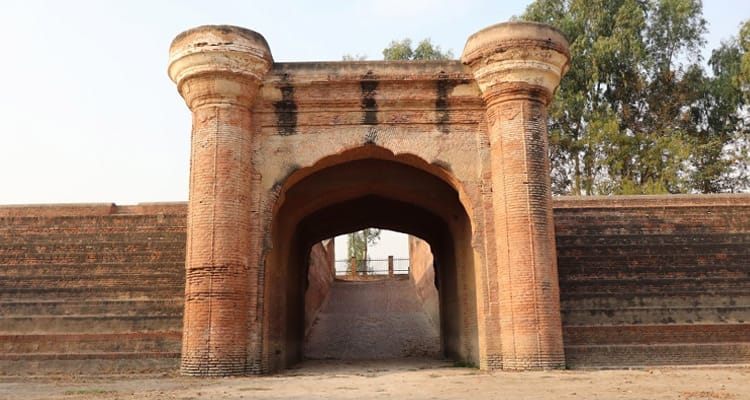
Amritsar, June 30 (Kamal Shamsher Singh): Punjab is renowned for its rich historical, religious, and cultural heritage. Among its many treasures is Pul Kanjri, a historic site located near the India–Pakistan border in Amritsar district. More than just an ancient bridge, Pul Kanjri stands as a living symbol of the legacy of Maharaja Ranjit Singh, Punjab’s glorious past, and its vibrant cultural heritage.
According to historians, Pul Kanjri was built in the early 19th century by Maharaja Ranjit Singh. Legend has it that while traveling from Lahore to Amritsar, the Maharaja noticed that a shoe belonging to the famous dancer Moran had fallen into a small stream at this location. Moved by the inconvenience faced by travelers, he ordered the construction of a sturdy bridge to improve connectivity. Over time, the place, initially known as “Pul Moran,” came to be popularly known as Pul Kanjri.
During the Sikh Empire, Pul Kanjri served as an important stop on the royal route connecting Lahore and Amritsar. The complex included a travelers’ inn (sarai), a stepwell (baoli) for bathing, stables for horses, a mosque, a temple, and several other public facilities. These structures reflected the remarkable architecture of the period and Maharaja Ranjit Singh’s commitment to public welfare and communal harmony.
Following the Partition of India in 1947, Pul Kanjri came to be located very close to the international border. Although the area’s prominence declined due to changing geopolitical circumstances, its historical significance has remained intact. Today, thousands of tourists, historians, and heritage enthusiasts from India and abroad visit the site to explore its rich legacy.
The Punjab Government and the Archaeology Department have undertaken restoration and conservation efforts from time to time to preserve this historic monument. The ancient bridge, stepwell, and other surviving structures continue to remind visitors of the grandeur of Maharaja Ranjit Singh’s reign. The serene surroundings, lush greenery, and views of the international border make Pul Kanjri a unique destination, especially during the evening.
Historians believe that Pul Kanjri is much more than a historic structure of bricks and stones. It represents Punjab’s shared cultural heritage, religious harmony, and spirit of public service. The site connects younger generations with their rich history and highlights the importance of preserving historical monuments.
Experts emphasize the need to promote Pul Kanjri more extensively so that more domestic and international tourists can experience this remarkable heritage site. Even today, Pul Kanjri remains a shining chapter in Punjab’s glorious history.
KL JIT WALIA