Delhi, May 8 — The land of Bengal, once filled with the melodies of Rabindranath Tagore, the spiritual brilliance of Swami Vivekananda, and the immortal literary works of Sarat Chandra Chattopadhyay, had for decades been covered in a silence that reflected not development, but the signs of destruction. This was the same Bengal that once guided the entire nation, but over time it was pushed into dark political pathways where only violence and revenge echoed.
First, the 35-year rule of the communists weakened Bengal’s industrial backbone, and later, during the last 15 years of All India Trinamool Congress governance, the state was allegedly pushed into corruption, appeasement politics, and administrative disorder. The shutdown of jute mills silenced the morning factory sirens, industries came to a halt, and Bengal’s youth were forced to leave their homeland in search of employment. In a state once known for its cultural identity, the sounds of Rabindra Sangeet were replaced by bombs and gunfire. Incidents ranging from Sandeshkhali to R. G. Kar Medical College and Hospital raised serious concerns regarding women’s safety and administrative negligence.
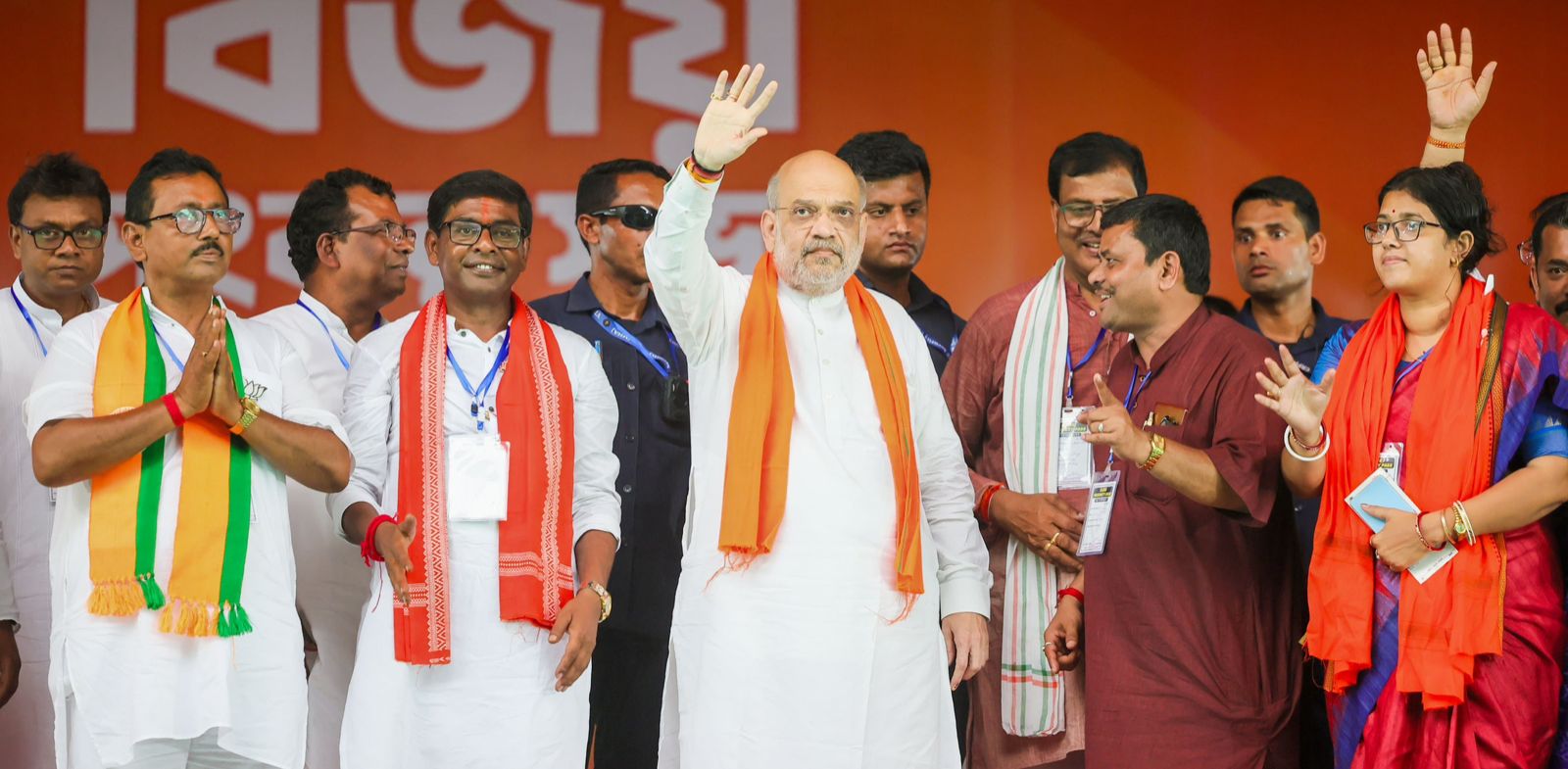
However, the scorching summer of 2026 appeared to signal the beginning of a new political chapter. When Amit Shah, often referred to as the modern-day “Chanakya” of Indian politics, arrived at Dum Dum Airport in Kolkata, his determination and strategic vision were clearly visible. According to political observers, Shah understood that Bengal was no longer seeking only a change in government, but also the restoration of its lost identity.
After successes in states like Chhattisgarh, Haryana, Maharashtra, and Delhi, Shah’s political strategy was now being linked to Bengal’s changing political landscape as well.
Leaving behind the comfort of air-conditioned meeting rooms in Delhi, Amit Shah reportedly spent extensive time on the ground in Bengal, travelling across the state for nearly 15 days. His campaign style projected the image of a leader on a mission not merely for electoral victory, but for ideological and organizational expansion.
One of the defining features of Shah’s political working style is considered to be his strong determination. In political circles, it is often said that whether it is Bhawanipur or New Delhi, converting determination into results has become Amit Shah’s political identity.
The rise of Bharatiya Janata Party in Bengal is being described not as an overnight development, but as the result of nearly a decade of organizational effort. In the 2016 West Bengal Assembly elections, the BJP had won only three seats. However, the party continued to expand its grassroots network. By 2021, the BJP’s tally increased to 77 seats, marking the party’s strongest challenge yet to Chief Minister Mamata Banerjee and the Trinamool Congress.
The article further claims that by 2026, the BJP’s growth to 207 seats symbolized the success of Amit Shah’s organizational skills and booth-level management strategies.
Through more than 50 rallies and numerous roadshows, Shah not only addressed political gatherings but also repeatedly invoked Bengal’s historical and cultural legacy, which BJP leaders claim had been weakened under the alleged “cut money” and syndicate culture of the ruling establishment.
From the tea gardens of North Bengal to the waterways of the Sundarbans, discussions around the BJP’s lotus symbol reportedly became widespread. According to supporters, Shah’s organizational structure became so strong that the traditional cadre network of the Trinamool Congress began to weaken significantly.
KL JIT WALIA